
May 5, 2025
Today I’ve decided to write a little about the importance of hand hygiene, a topic that is all the more important nowadays.
Hand hygiene plays an important and fundamental role in personal health and food safety.
The benefits of this small and simple task are evident, and yet there are concerns that continue to stand out, namely that food handlers don’t always wash their hands as often as they should or don’t wash their hands effectively. Incorrect hand washing is a risk factor for food-borne illnesses. The fecal-oral route of food contamination represents the most common source of foodborne illness. Breaking this chain of contamination is the first major action to minimize the risk.
In reality, a large number of illnesses could be avoided if people followed strict personal hygiene and hand hygiene procedures. Frequent and effective hand washing removes bacteria and microorganisms from hand surfaces.
One of the most important times to wash your hands is after using the toilet. Many diseases are caused by bacteria transmitted via the fecal-oral route. Another time when hand washing is important and should be done is after eating, drinking, smoking, coughing or sneezing. You should also wash your hands before handling food or touching food contact surfaces.
After using gloves or even when changing gloves, hands should be washed before and after using them. Gloves often create a false sense of security and make many food handlers believe that their hands are clean.
Hands should be washed in appropriate facilities, which should be kept in good working and hygienic condition. These areas must have hot and cold running water, manually operated taps and be provided with disinfectant bactericidal liquid soap and disposable paper towels.
The procedure for washing hands must be communicated to all staff and must include:
1: Rinse your hands under warm running water.
This step removes most debris from the hands and prepares them for the application of soap.
2: Apply soap.
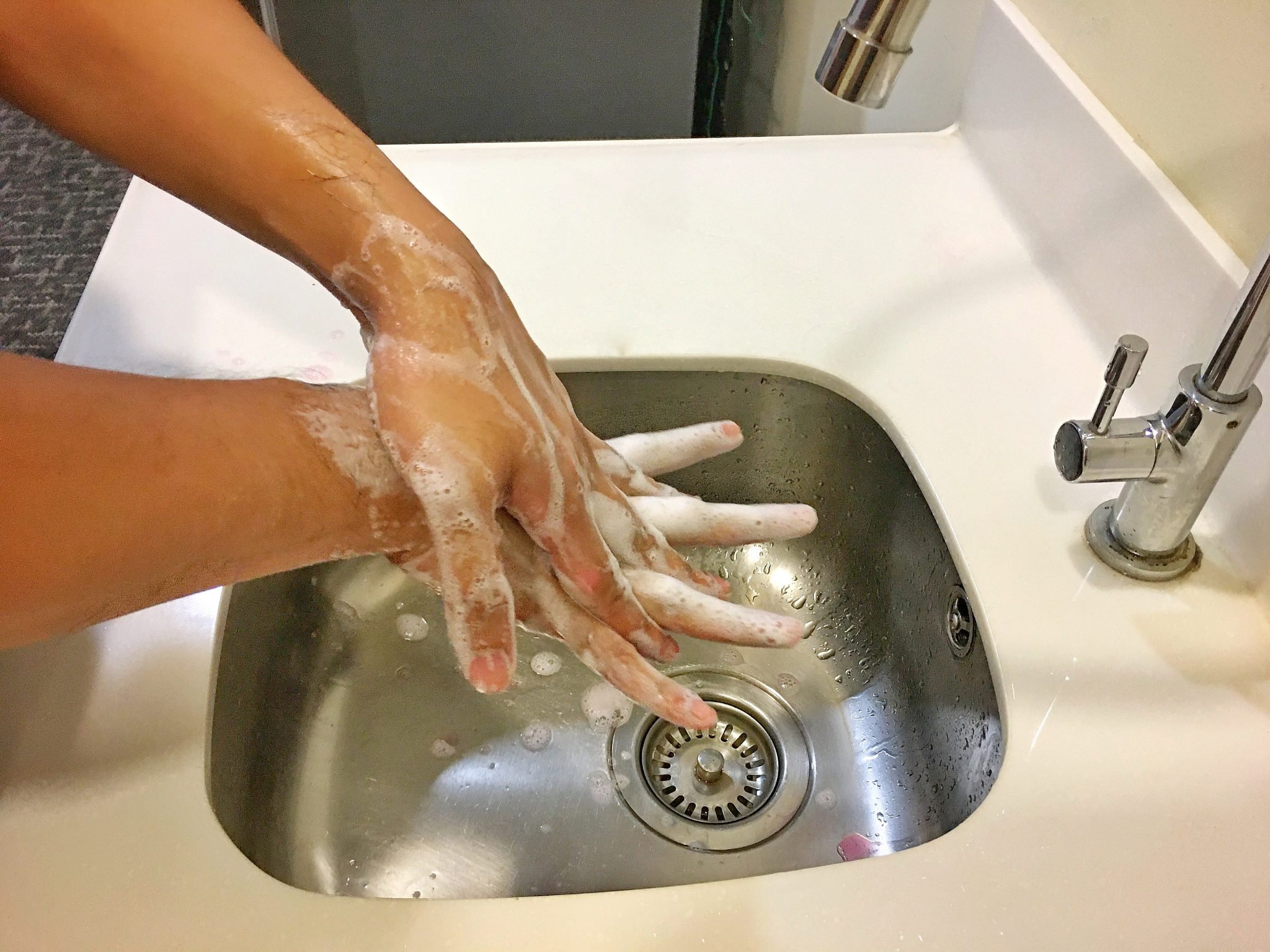
This step should take up most of the hand washing session. Scrub your hands thoroughly and clean between your fingers and under your nails. It is acceptable to use a nail brush for this step if, and only if, it is kept in good hygienic condition. The forearms often contain as many bacteria as the hands themselves. It is crucial to include forearm washing during this stage.
3: Rinse your hands thoroughly.
This step is important as it prepares your hands for the application of the disinfectant. If soap residue is left on the hands, the disinfectant may not be effective. Rinse your hands thoroughly and remove all soap.
4: Dry your hands.
Hands should be dried with disposable paper towels. The use of cloth towels is prohibited. After drying your hands, if necessary, use another paper towel to turn off the tap and/or open the door.
5: Apply the disinfectant.
Hands must be completely dry before adding the antiseptic. After applying the antiseptic, let your hands air dry.
Hand washing promotes personal health and reduces the risks associated with food safety, which is why it is essential to promote awareness and training actions for workers in the food industry and beyond. This is an important procedure for all of us and should be applied by everyone.
Share

About us
Work Quality offers training and consultancy in safety, food hygiene and personal development with a focus on excellence and updating.

Contacts
- +351 918 313 851
- geral@workquality.pt
- Estrada dos Portões Vermelhos n.º 20, 9560-450, Lagoa, Gabinete 11
